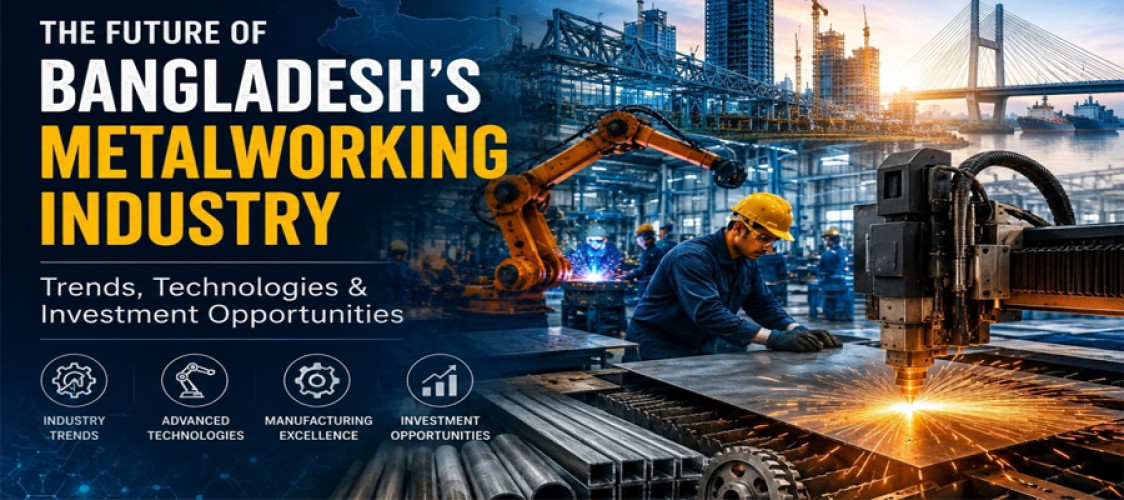

Introduction
Bangladesh is rapidly emerging as one of Asia's most promising industrial economies. Over the past decade, the country has experienced significant growth in manufacturing, infrastructure development, urbanization, and foreign investment. While the Ready-Made Garments (RMG) sector has traditionally dominated Bangladesh's industrial landscape, the metalworking industry is increasingly becoming a critical pillar of the nation's economic transformation.
The metalworking industry encompasses a broad range of activities, including steel fabrication, machining, welding, casting, forging, sheet metal processing, industrial machinery manufacturing, automotive components production, shipbuilding, and engineering services. As Bangladesh continues its journey toward becoming an upper-middle-income economy, demand for high-quality metal products, engineering solutions, and advanced manufacturing technologies is growing at an unprecedented pace.
Driven by mega infrastructure projects, industrial expansion, technological innovation, and government initiatives to promote local manufacturing, the future of Bangladesh's metalworking industry presents substantial opportunities for businesses, investors, manufacturers, and technology providers alike.
A Growing Foundation for Industrial Development
The metalworking industry serves as the backbone of industrial growth. Virtually every major sector—including construction, power generation, transportation, agriculture, shipbuilding, electronics, and manufacturing—relies on metal products and engineering solutions.
Bangladesh's industrial sector has undergone remarkable transformation in recent years. Massive investments in infrastructure and industrial development have created strong demand for fabricated steel structures, industrial equipment, machinery parts, and precision-engineered components. The government's commitment to industrialization and economic diversification has further strengthened the sector's growth prospects. As industries modernize and production capabilities expand, the demand for advanced metalworking technologies and locally manufactured engineering products continues to increase.
Infrastructure Development Driving Demand
One of the primary growth drivers of Bangladesh's metalworking industry is the country's ambitious infrastructure development agenda. Major projects such as the Padma Bridge, Dhaka Metro Rail, Rooppur Nuclear Power Plant, Matarbari Deep Sea Port, elevated expressways, economic zones, and industrial parks have significantly increased demand for steel structures, fabricated metal components, heavy machinery, and engineering services.
These large-scale developments require extensive use of structural steel, precision fabrication, welding technologies, and industrial equipment. As the government continues to invest in transportation networks, energy infrastructure, ports, and urban development projects, the metalworking sector is expected to experience sustained growth for many years.
Infrastructure investment not only creates immediate demand but also establishes the foundation for future industrial expansion, further strengthening the long-term outlook of the metalworking industry.
Manufacturing Diversification Creating New Opportunities
Bangladesh is actively diversifying its manufacturing base beyond garments. Industries such as electronics, home appliances, automotive assembly, agricultural machinery, food processing equipment, and industrial machinery manufacturing are gaining momentum.
These emerging sectors depend heavily on high-quality metal components, precision machining, fabricated parts, and engineering services. As local manufacturers seek to improve product quality and reduce dependence on imports, opportunities for domestic metalworking companies continue to expand.
Import substitution is becoming a major trend, encouraging investments in local production of machinery parts, industrial tools, molds, dies, and precision-engineered components. This shift is expected to create significant opportunities for both local entrepreneurs and international investors.
Industry 4.0 and Digital Transformation
The global manufacturing landscape is being transformed by Industry 4.0 technologies, and Bangladesh is gradually embracing this revolution. Smart manufacturing systems, automation, artificial intelligence, data analytics, cloud computing, and machine connectivity are becoming increasingly relevant across the country's industrial sector.
Industry 4.0 enables manufacturers to optimize production processes, reduce operational costs, improve quality control, and enhance overall efficiency. Companies that adopt digital manufacturing technologies gain a competitive advantage through faster production cycles, better resource management, and improved customer satisfaction.
As awareness and accessibility of advanced technologies increase, Industry 4.0 adoption is expected to accelerate across Bangladesh's metalworking industry.
CNC Machining and Precision Engineering
Computer Numerical Control (CNC) machining has become a cornerstone of modern manufacturing. CNC technology enables manufacturers to produce highly precise and complex metal components with exceptional accuracy and consistency.
The demand for CNC machining services in Bangladesh is growing rapidly, particularly in industries such as automotive manufacturing, electronics production, industrial machinery, tooling, and engineering services. Precision engineering capabilities are becoming increasingly important as manufacturers seek to meet international quality standards and compete in global markets.
Investment in CNC equipment, tooling technologies, and skilled operators will play a crucial role in enhancing Bangladesh's manufacturing competitiveness in the coming years.
Automation and Robotics in Metalworking
Automation is reshaping the future of metalworking worldwide, and Bangladesh is beginning to embrace this trend. Modern manufacturing facilities are increasingly utilizing automated welding systems, robotic material handling, laser cutting machines, and automated quality inspection technologies.
Automation helps manufacturers improve productivity, reduce human error, enhance workplace safety, and lower production costs. As labor costs gradually rise and international competition intensifies, more companies are expected to invest in automation solutions.
Robotic welding systems, automated fabrication lines, and smart production technologies are likely to become standard features in advanced manufacturing facilities throughout Bangladesh.
The Rise of Laser Cutting Technology
Laser cutting technology has revolutionized sheet metal processing by offering unparalleled precision, speed, and efficiency. Fiber laser cutting systems enable manufacturers to produce intricate designs, minimize material waste, and achieve superior finishing quality.
As industries demand greater precision and faster turnaround times, laser cutting technology is becoming increasingly popular among metal fabricators and engineering companies in Bangladesh. Investments in advanced cutting technologies will continue to enhance the competitiveness of local manufacturers.
The widespread adoption of laser cutting systems is expected to significantly improve productivity and quality standards across the metalworking sector.
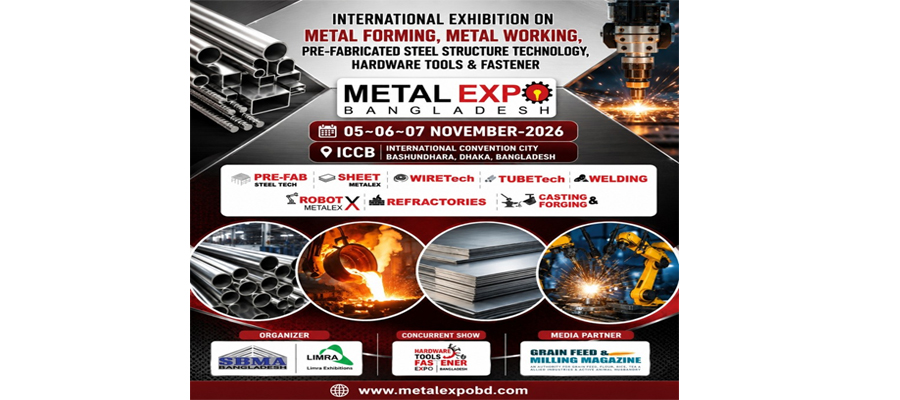
Metal Expo Bangladesh 2026", November 05-07, 2026 at ICCB, Dhaka, Bangladesh
Artificial Intelligence and Smart Manufacturing
Artificial Intelligence (AI) is rapidly transforming manufacturing operations worldwide. In the metalworking industry, AI is being used for predictive maintenance, quality control, production planning, inventory optimization, and supply chain management.
AI-powered systems can analyze large volumes of operational data to identify potential equipment failures before they occur, reducing downtime and maintenance costs. Smart manufacturing technologies also enable real-time monitoring and performance optimization.
As AI solutions become more affordable and accessible, their adoption within Bangladesh's industrial sector is expected to increase significantly.
Investment Opportunities in Bangladesh's Metalworking Industry
The future of Bangladesh's metalworking industry offers substantial investment opportunities across multiple segments.
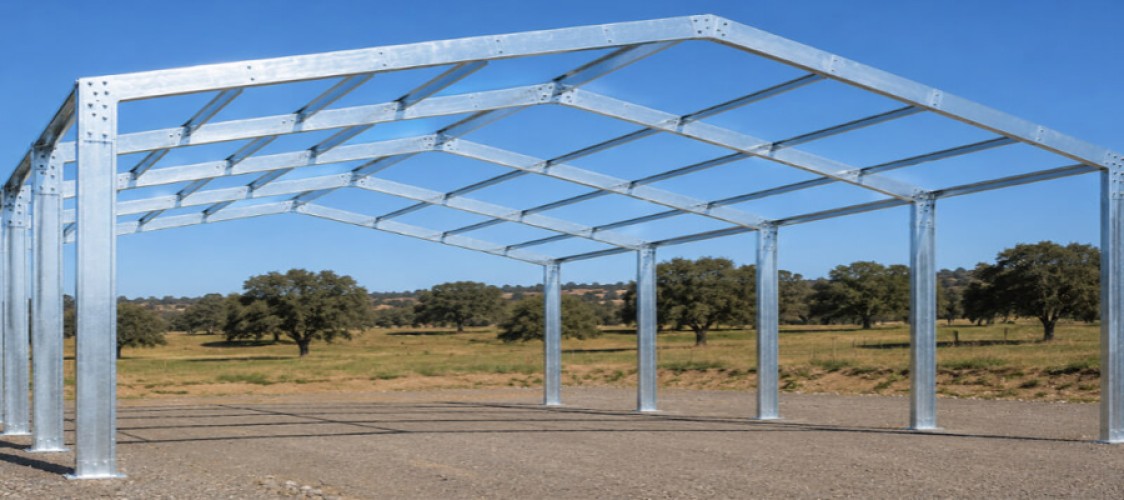
Steel fabrication remains one of the most attractive areas for investment due to ongoing infrastructure development and industrial construction projects. Demand for industrial buildings, warehouses, steel structures, bridges, and prefabricated construction solutions continues to grow.
Industrial machinery manufacturing presents another significant opportunity. Bangladesh still imports a large portion of its industrial equipment, creating opportunities for local production of machinery components, agricultural equipment, packaging machines, food processing equipment, and textile machinery parts.
Precision engineering and tooling represent high-growth segments with strong potential for import substitution and export development. Investments in molds, dies, CNC machining, and specialized engineering services can generate substantial returns as industrial demand increases.
The automotive sector also offers promising opportunities. Growing demand for vehicles and motorcycles is creating a need for locally manufactured components, chassis parts, engine components, sheet metal products, and precision-engineered assemblies.
Shipbuilding and marine engineering remain strategic sectors where Bangladesh has already established a strong international reputation. Continued growth in shipbuilding activities creates demand for advanced metal processing, welding technologies, and marine equipment manufacturing.
Export Potential and Global Competitiveness
Bangladesh's strategic geographic location provides access to major regional and international markets. With improving manufacturing capabilities and competitive production costs, the country has significant potential to become a regional hub for engineering products and metalworking solutions.
Export opportunities exist in fabricated steel products, industrial machinery, engineering components, automotive parts, marine equipment, and specialized metal products. Strengthening quality standards, obtaining international certifications, and investing in advanced manufacturing technologies will be essential for expanding export markets.
As global supply chains diversify and manufacturers seek alternative sourcing destinations, Bangladesh is well-positioned to attract new business opportunities in the engineering and metalworking sectors.
Challenges and the Road Ahead
Despite its strong growth potential, the metalworking industry faces several challenges. These include shortages of skilled technical professionals, limited adoption of advanced technologies among smaller manufacturers, high capital investment requirements, and the need for stronger research and development capabilities.
Addressing these challenges will require collaboration between government agencies, industry associations, educational institutions, technology providers, and private-sector stakeholders. Investments in workforce development, vocational training, and industrial innovation will be critical to sustaining long-term growth.
By focusing on modernization, technology adoption, and quality improvement, Bangladesh can overcome these challenges and strengthen its position in the global manufacturing landscape.
Conclusion
The future of Bangladesh's metalworking industry is exceptionally promising. Supported by infrastructure development, industrial diversification, technological innovation, and favorable investment policies, the sector is poised for substantial growth over the next decade.
Industry 4.0 technologies, CNC machining, automation, robotics, artificial intelligence, and smart manufacturing solutions are transforming production capabilities and creating new opportunities for businesses and investors. At the same time, growing domestic demand and expanding export potential are strengthening the industry's long-term outlook.
You can learn about South Asia's
largest exhibition on this topic through this link: https://metalexpobd.com/
---















Copyright © 2026 LIMRA Exhibitions. All Rights Reserved.
Website Design & Development ♡ MY SOFT IT
 EN
EN
 Chinese
 Turkish
 Indonesian
 German
 French
 Spanish
 Portuguese
 Russian
 Italian